The Universe Did Not Include a Progress Bar
We can misplace our keys and work out why stars shine. Both facts belong in the same picture.
David Deutsch’s The Fabric of Reality and The Beginning of Infinity suggest a way to hold them together: fallible minds can create explanations whose reach exceeds their starting point.
Nobody knows the denominator
How much of reality do we understand: one percent, ten? The question assumes a catalogue we don’t have. Deutsch’s “infinity” is not a promise that we will eventually know everything. It is the claim that progress need have no final stage. There may always be another problem worth solving.
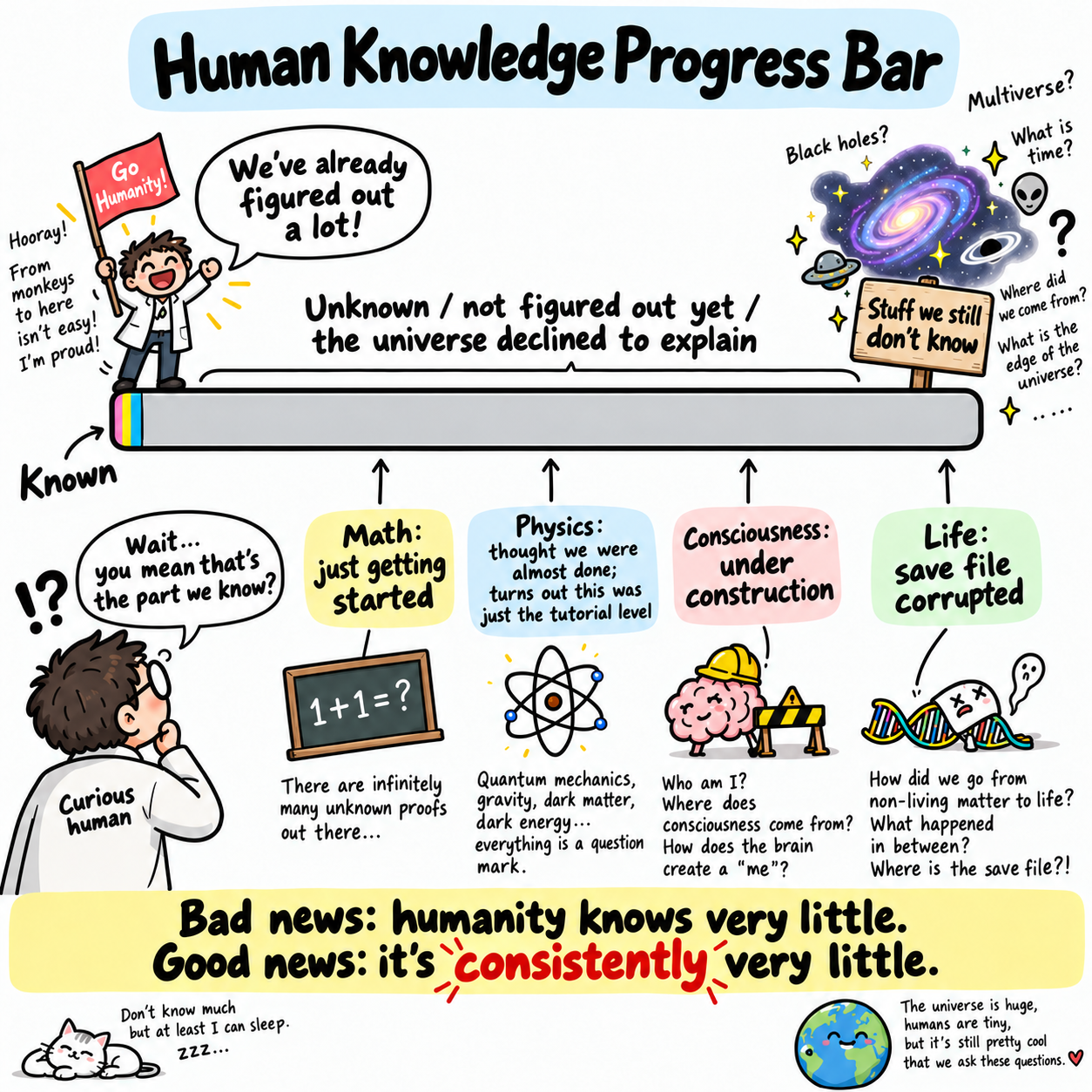
Small brains, wide reach
The Fabric of Reality connects quantum physics, evolution, computation, and knowledge. Understanding, on this view, comes from explanations that fit together, not from memorizing more facts. We can understand a process without storing every event it produces. Limited memory does not, by itself, establish a limit to what can be explained.
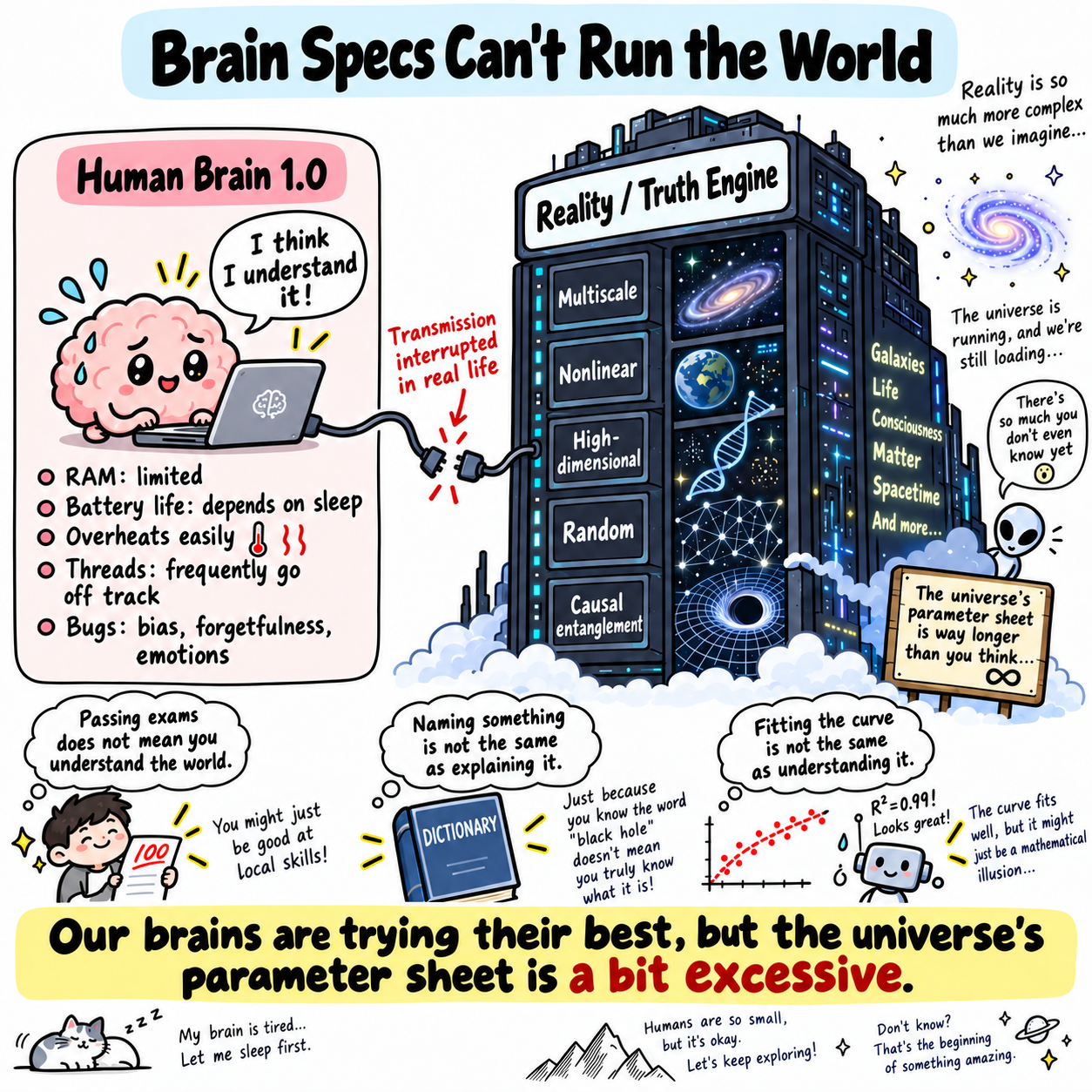
Ideas can outlive the afternoon
One person cannot investigate everything. But a proof, a book, or a well-described failed experiment can become somebody else’s starting point. A short life needn’t become a race to collect facts. There is value in choosing a question carefully and leaving work others can question and improve.
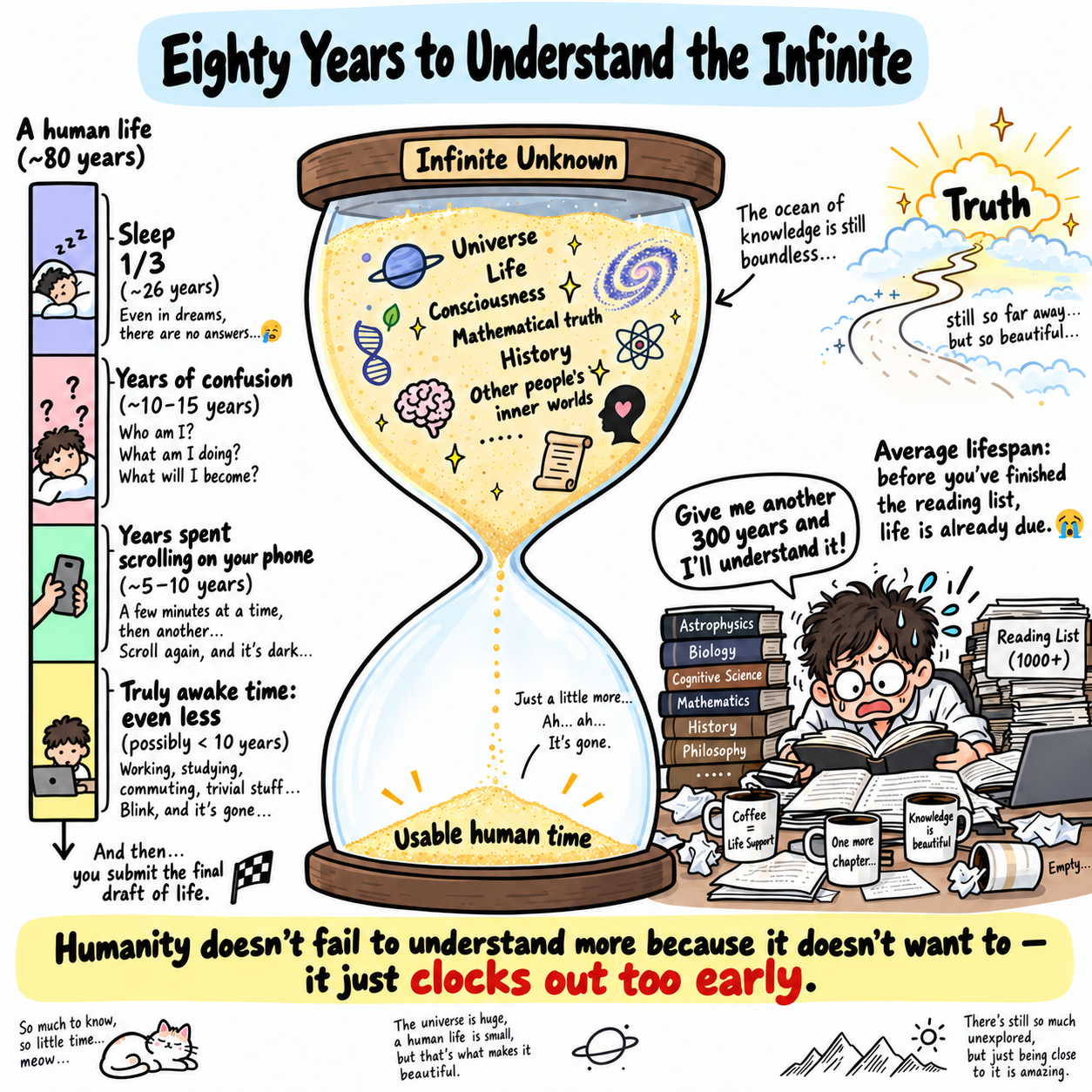
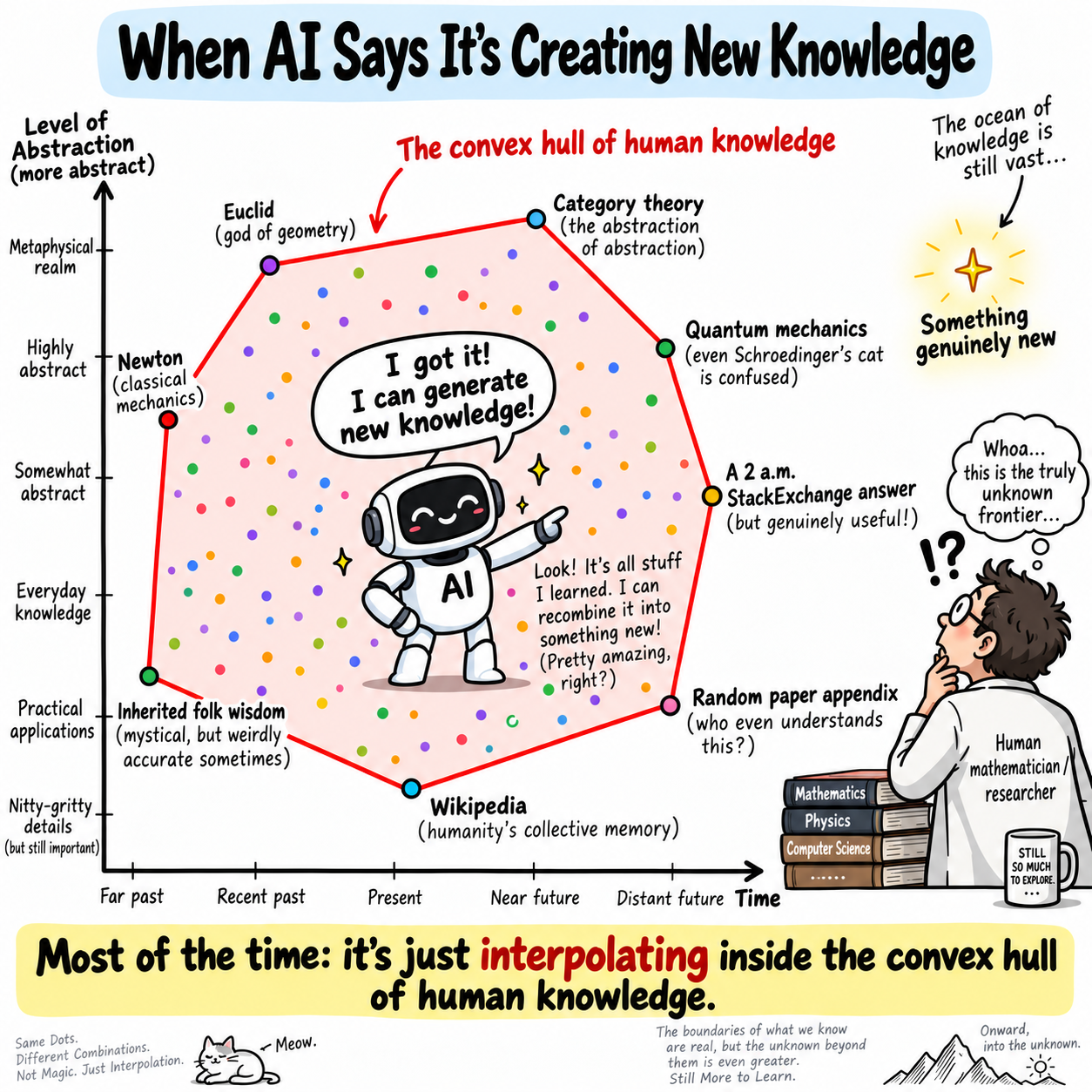
The polygon is not a prison
The cartoon below is not a theorem about AI’s limits. “Only remixing” does not settle whether an idea explains anything. Deutsch’s criterion is that good explanations are hard to vary while still accounting for their subject. Applied to AI-assisted research, that suggests asking which details matter, what would break the account, and where it fails.
More mountains can mean progress
An explanation can reach beyond the problem that prompted it. Earth’s axial tilt explains why the hemispheres have opposite seasons, including places its inventor never visited. Such reach opens new questions. Counting unanswered questions could make a breakthrough look like a setback. The mountain range was there; now we can see it.
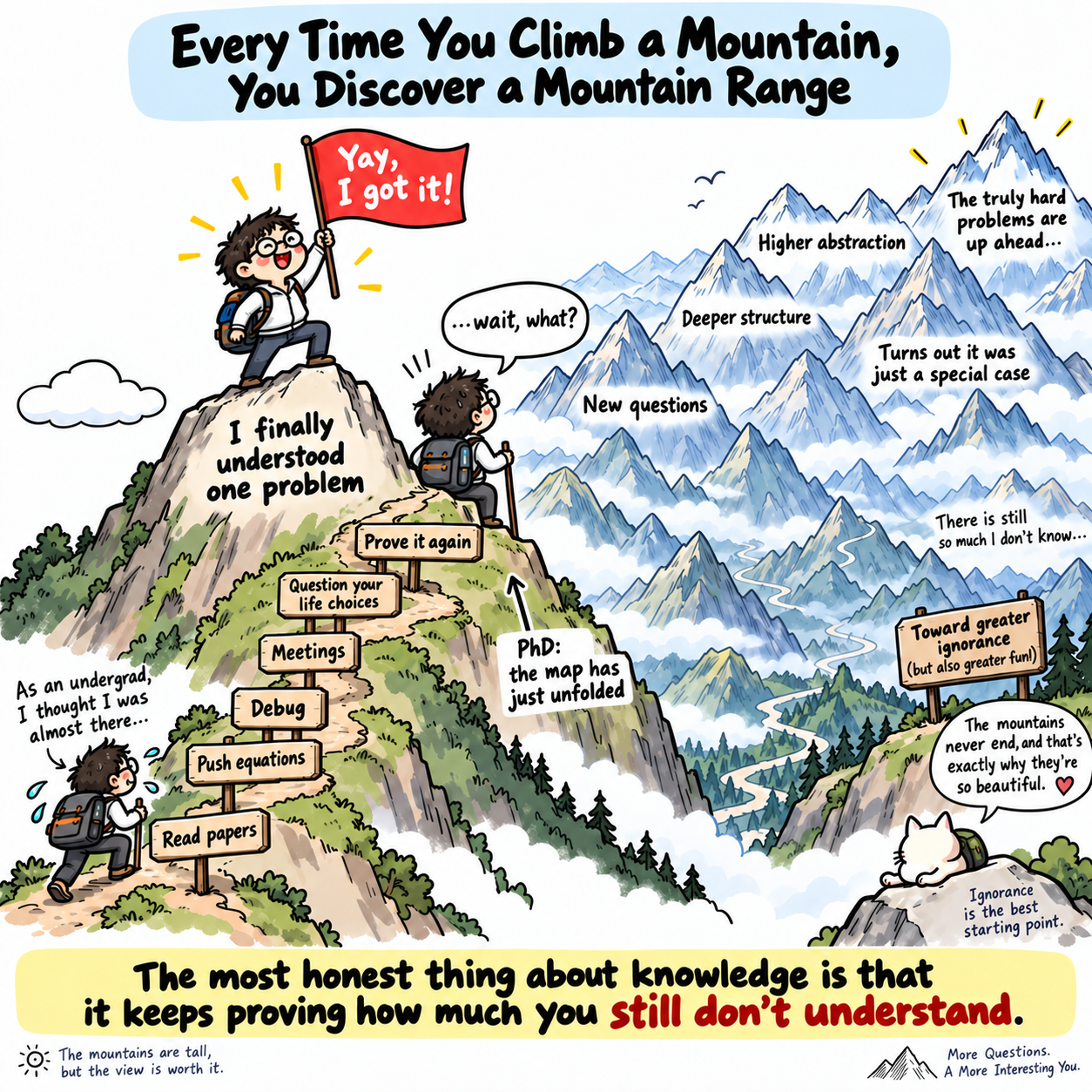
Keep the corrections coming
Deutsch’s optimism is not a forecast that things will work out. Solving problems requires knowledge we may not yet have; we can fail to find it in time. So criticism, experimentation, and revision matter. Passing on knowledge means letting the next person improve it, not asking them to admire it untouched.
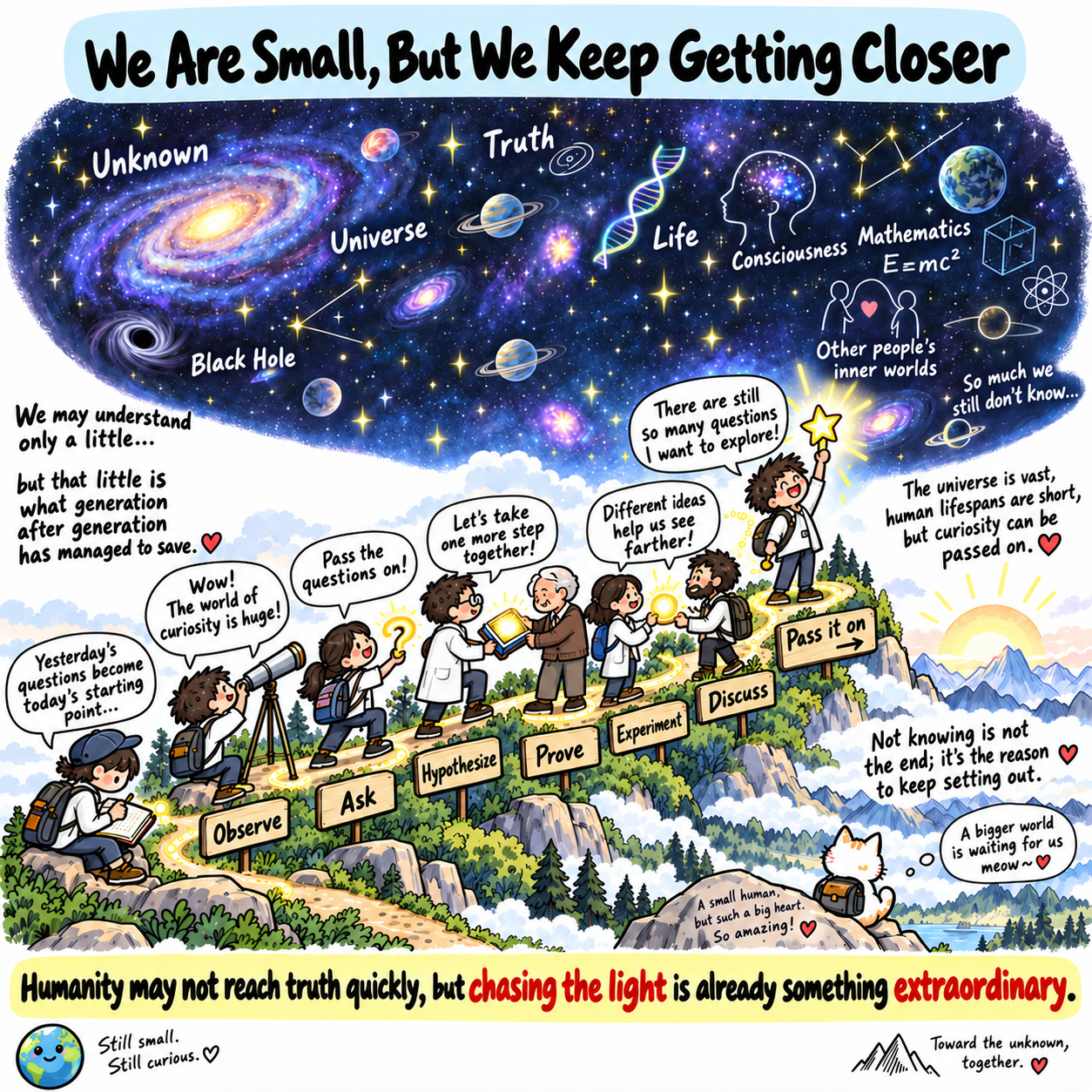
A better explanation is progress, even when it leaves us with more to ask.
The cartoons are metaphors, not measurements. The AI discussion applies these ideas; it does not report Deutsch’s assessment of today’s models. Tap any figure to see it full-size.
Revised .